Indian Regulation Hub
Value-Chain Disclosures — What Listed Companies Will Ask of You
BRSR's value-chain rule lets listed companies pull ESG data from suppliers that make up just 2% of their purchases or sales. Here's who gets asked, and why.
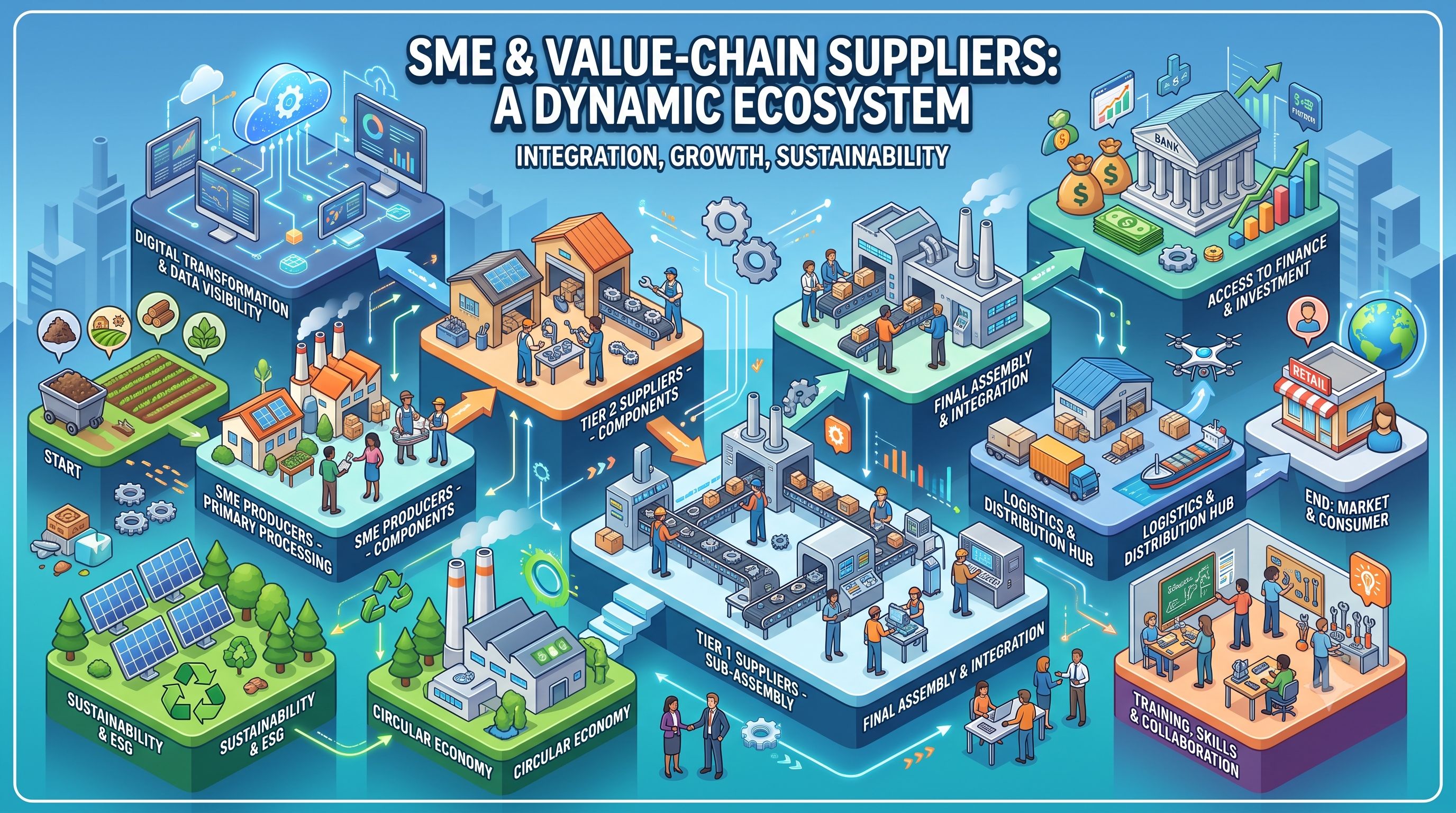
TL;DR
BRSR requires large listed companies to disclose ESG data not just about themselves, but about their value chain — suppliers and customers that make up a meaningful share of their business. The threshold is low: any entity representing 2% or more of purchases or sales can be pulled into scope. This is exactly the mechanism that turns "I'm not a listed company, BRSR doesn't apply to me" into "my biggest customer just emailed me a questionnaire."
Who this is for
Suppliers and business partners of large listed Indian companies who want to understand why value-chain data requests happen, not just how to respond to one.
Plain explanation
A listed company's own operations are only part of its real environmental and social footprint — a large share often sits with its suppliers (upstream) and how its products are used or disposed of (downstream). Regulators recognized this, so BRSR extends disclosure obligations beyond a company's own four walls into its value chain.
In practice, this means a BRSR-filing company must gather and disclose data — the same categories covered in BRSR itself, like emissions, worker safety, and governance policies — from entities that make up a significant share of what it buys or sells. Since the listed company can't measure a supplier's factory floor itself, it does the only thing it can: ask.
India specifics
The threshold is low on purpose. A value-chain partner (supplier or customer) is generally captured if it represents 2% or more of the listed company's purchases or sales, with the option for the company to instead cover partners representing the top 75% of its value chain by value. Either way, this pulls in a real, sizeable slice of business partners — not just the handful of largest, most obvious ones.
It's been repeatedly deferred and softened. Value-chain disclosure requirements under BRSR shifted from a stricter "comply-or-explain" posture to fully voluntary, with mandatory value-chain reporting currently pushed out to FY 2026–27, and assurance for value-chain data even further behind that. This softening reflects real pushback about the burden this places on smaller, unlisted suppliers who have no BRSR obligation of their own.
Voluntary for the listed company doesn't mean nobody asks you. Even while it's voluntary under SEBI's rules, many listed companies choose to collect value-chain data anyway — it strengthens their own report, and improves their standing with investors and rating agencies who increasingly expect it. That's why a supplier can receive a detailed ESG questionnaire well before the requirement is formally mandatory. See our guide on what to do when this happens to you.
Worked example
Vantage Fasteners supplies bolts and fittings to a large listed appliance manufacturer, representing about 3% of that manufacturer's total purchase value — comfortably above the 2% threshold. Even though value-chain reporting is still voluntary for its customer this year, the manufacturer's sustainability team has decided to start collecting data from its top suppliers early, ahead of the FY 2026–27 shift toward mandatory reporting. Vantage receives a questionnaire asking about its energy sources and worker safety record — not because Vantage is legally required to answer, but because its size in the relationship puts it squarely in the group its customer is now prioritizing.
Checklist
- If you're a significant supplier or customer (roughly 2%+ of purchases/sales) to a listed company, expect a data request even before value-chain reporting is fully mandatory.
- Don't assume "voluntary for them" means "optional to ignore" — many companies collect this data proactively regardless of the formal deadline.
- Track the FY 2026–27 mandatory shift — if you're a repeat value-chain partner, this is likely to become a recurring, more formal request over time.
- Reuse data across multiple customers' requests where possible — see our guide on what ESG frameworks actually cost if a request pushes you toward a paid scheme like EcoVadis or Sedex.
What to do next
If this has already happened to you, here's a practical step-by-step for responding.
Current as of: 22 July 2026. Value-chain disclosure thresholds and timelines have shifted multiple times since introduction and are reviewed here whenever SEBI issues an update — treat any date more than 12 months old as due for a recheck.
Sources: